Your First Motorcycle: Three Rules Most Buyers Break
May 25, 2026
If you're about to buy your first motorcycle, the internet is going to drown you in horsepower charts, displacement debates, and YouTube test rides. None of that matters.
The three things below decide whether you'll still own a bike 12 months from now. Get these right and the rest sorts itself out.
Rule 1: Buy used, but not too used
The single biggest mistake first-time buyers make is buying a brand-new bike from a dealership.
Here's the math: a new $9,000 bike loses $2,500 in resale value in year one. You almost certainly will drop it in the first three months (95% of new riders do — parking lots, low-speed maneuvers, gravel driveways). Fixing scratched plastics and a bent lever on a new bike is $400-$800. On a used bike from someone else's drop, $50 and a $15 lever from Amazon.
The sweet spot for a first bike: 2-5 years old, single previous owner, dealership-maintained. You get a depreciated price (often 40-50% off MSRP), a bike that's been broken in properly, and someone else has already paid the "I dropped it learning" tax.
What to avoid:
- "Project bikes" sold cheap — the previous owner gave up for a reason
- Anything with custom electrical work (rewired harnesses, aftermarket immobilizers)
- Bikes with no service history — even a single oil change record is better than none
Rule 2: Buy small. Smaller than you think.
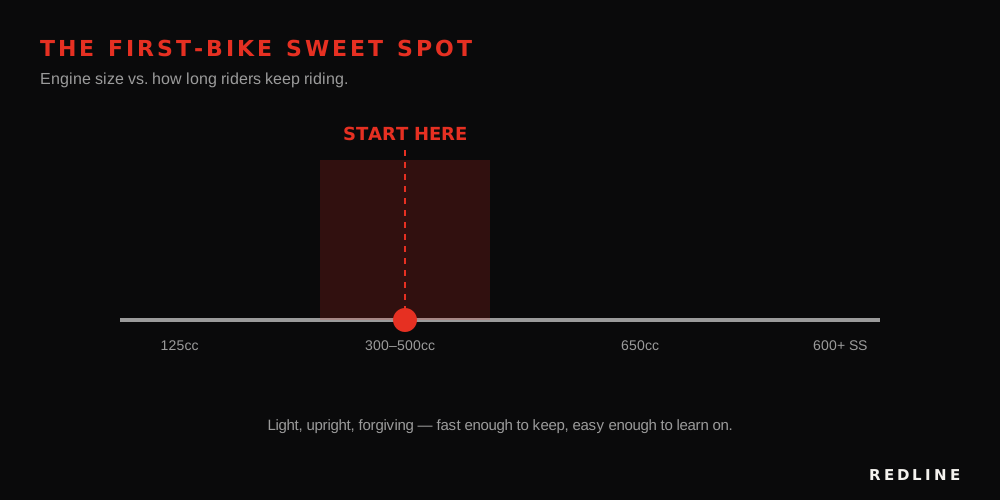
Every new rider thinks they want a 600cc supersport because that's what looks cool on Instagram. Six months later they're selling it because the bike is faster than their skills, the riding position destroyed their wrists, and they're too nervous to take it out in traffic.
For 95% of beginners, the right first bike is 300-500cc, naked or standard, with an upright seating position.
That means bikes like:
- Yamaha MT-03 / R3
- Kawasaki Z400 / Ninja 400
- Honda CB300R / CBR300R
- KTM 390 Duke
- Royal Enfield Hunter 350 / Meteor 350
These bikes can hit 160 km/h. They lane-split through city traffic like a knife. They're light enough to lift off when you do drop them in a parking lot. They teach you proper throttle control because they don't let you escape every mistake with raw power.
You will outgrow them eventually. That's fine. They hold value because they're always in demand for the next new rider. You'll sell yours in 18 months for 80% of what you paid.
Rule 3: Budget for gear like it's part of the bike price
Riders consistently underbudget gear. They drop the entire allowance on the bike, then "save money" on a $150 helmet and skip the jacket entirely.
Don't.
The minimum gear budget for a new rider should be 20-25% of your bike budget, and it should be spent on:
- A proper helmet ($250-$450) — ECE 22.06 / DOT certified, full-face, fits properly
- An armored jacket ($200-$400) — CE Level 2 back protector, mesh for summer or textile for year-round
- Riding gloves ($60-$150) — leather palm with knuckle protection
- Riding boots ($150-$300) — ankle support, oil-resistant sole, reinforced toe
- Riding jeans or pants ($150-$350) — Kevlar-lined or proper armored riding pants
That's $810-$1,650 in gear. Yes, it's a lot. No, you cannot skip any of it. The math is simple: a single low-speed slide will cost more than the entire gear budget if you're in shorts and sneakers — and that's just the medical bills, not the trauma of healing road rash for three months.
What the full playbook covers
We just scratched the top of the iceberg. The complete first-bike playbook goes into:
- Inspection checklist — what to look at, in what order, when you go see a used bike (with photos)
- Negotiation script — exactly what to say to drop the price by $500-$1,500
- Test ride protocol — the 20-minute test ride that reveals 80% of hidden problems
- Insurance shopping — how to cut your first-year premium in half without sacrificing coverage
- Pre-purchase mechanical checklist — the seven things to verify before you hand over money
- First-30-days checklist — what to do, in what order, in your first month of ownership
It's the manual we wish someone had handed us when we bought our first bike.
— REDLINE